How dogs read our faces, gestures and moods
Dogs follow a pointing finger better than chimpanzees and may have evolved a muscle for puppy dog eyes. What research says about how dogs read us.
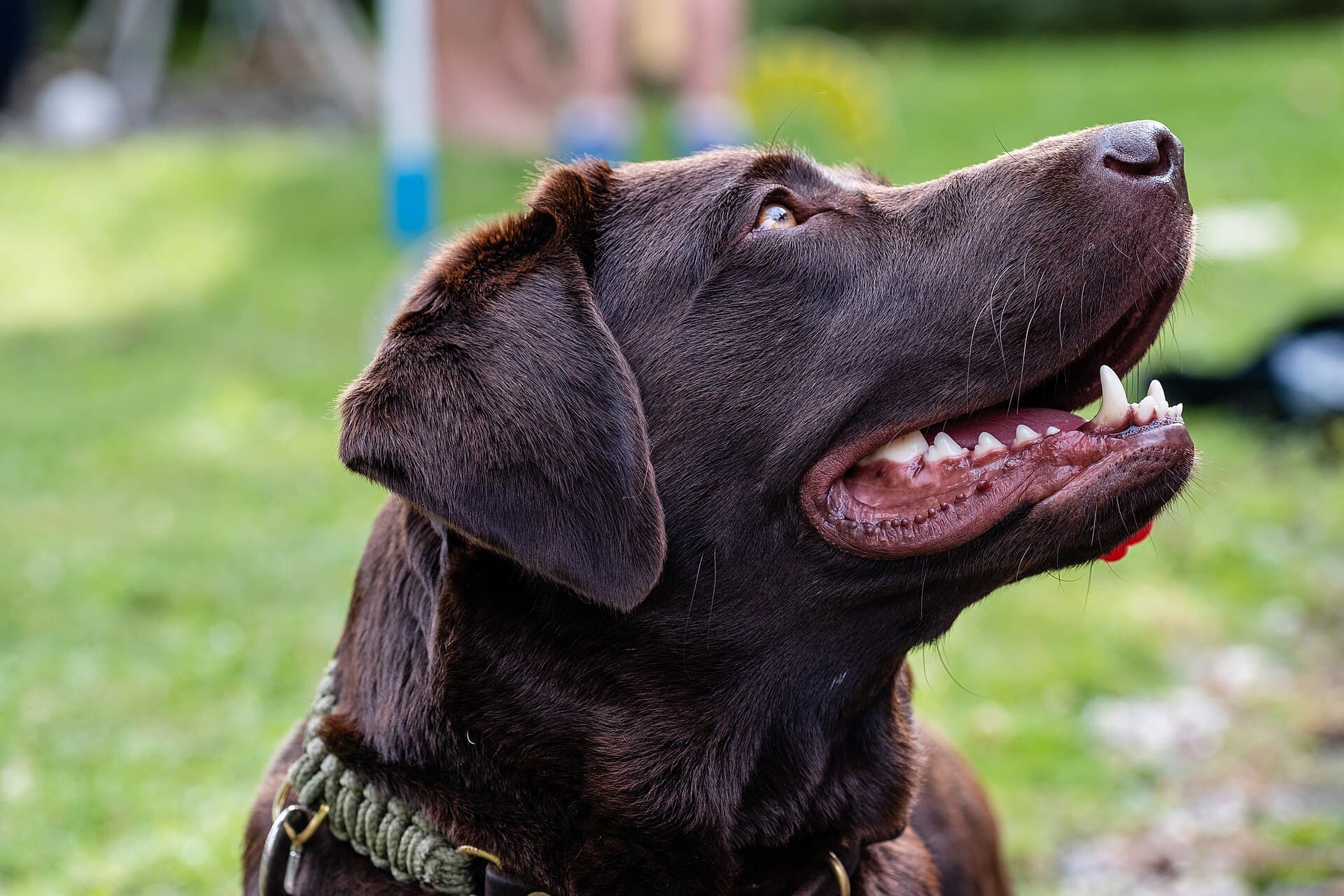
Dog owners often say their dog "just knows" when they are sad, excited or about to leave the house. It can sound like wishful thinking, but over the past 25 years, researchers have tested these abilities in controlled experiments. The results show that dogs are unusually skilled at reading human signals.
Following a pointing finger
A classic experiment hides food under one of two cups. A person then points at the correct cup. Many dogs choose the right one, even as puppies with little training.
In 2002, a study led by Brian Hare compared dogs with chimpanzees, our closest relatives, and with wolves raised by people. Dogs used pointing and gaze cues more successfully than chimpanzees did. Hand-raised wolves did less well than dogs in that study, which suggested that domestication itself, not just living with people, shaped this skill.
Later research added nuance. Wolves given intensive socialization can learn to follow some cues, and individual dogs vary a lot. Still, the overall pattern holds: dogs are exceptionally good at paying attention to what people are trying to tell them.
Reading emotions
Can dogs tell a happy face from an angry one? Several studies suggest they can. In one 2016 experiment by Natalia Albuquerque and colleagues, dogs were shown pictures of human faces with different expressions while hearing a voice. They looked longer at faces whose expression matched the emotion in the voice. That suggests dogs combine what they see and hear into a sense of a person's emotional state.
Other studies have found that dogs tend to avoid people who look angry and behave differently around owners who are stressed. This doesn't mean a dog understands emotions exactly as a person does, but they do respond to them.
The "puppy dog eyes" muscle
A 2019 study by Juliane Kaminski and colleagues compared facial muscles in dogs and wolves. Dogs have a well-developed muscle above the eye, the levator anguli oculi medialis, which lets them raise the inner eyebrow. This movement makes the eyes look bigger and gives the face a sad, appealing expression. In wolves, the same muscle is small or barely present.
The researchers also found that dogs make this movement more when a person is looking at them. They suggested that people may have unconsciously favored dogs with expressive eyebrows during domestication, because the expression triggers a caring response in us.
Learning words
Most dogs learn a handful of words, such as their name, "walk" and "dinner." A few go much further. Research on "gifted word learner" dogs, mostly Border Collies, has documented individuals who know the names of dozens or even hundreds of toys and can fetch a named toy from a pile.
These dogs are rare, and most of the dogs in those studies did not learn toy names despite training. If your dog doesn't know the names of its toys, that is completely normal.
What this means at home
Knowing how closely dogs watch us can make everyday life easier:
- Be consistent with signals. Dogs pay attention to body language as much as words. If "sit" comes with a hand signal, keep the signal the same.
- Mind your mood. Dogs often pick up on tension. Training goes better when you are calm and patient.
- Use your face and voice for praise. A warm voice and relaxed expression are rewards in themselves for many dogs.
- Watch your dog's signals too. Communication goes both ways. Yawning, lip licking, turning away and a tucked tail can all signal stress.
A partnership thousands of years old
Dogs were domesticated from ancient wolves at least 15,000 years ago, and possibly much earlier. Over that long partnership, dogs have become specialists in reading one particular species: us. When your dog watches your face, it is using skills shaped by thousands of years of living side by side.
Sources
- Hare B. et al. (2002). The domestication of social cognition in dogs. Science.
- Albuquerque N. et al. (2016). Dogs recognize dog and human emotions. Biology Letters.
- Kaminski J. et al. (2019). Evolution of facial muscle anatomy in dogs. PNAS.
Written by Your Name
Every claim in this article is checked against the published studies listed above. Found an error? Tell us and we will correct it.
Field fact
Dogs have a muscle that raises the inner eyebrow. In wolves it is small or barely present.