Why do cats purr? It is not always happiness
Cats purr when they are content, but also when they are hungry, stressed or hurt. How purring works, and the hidden cry some cats add when they want food.
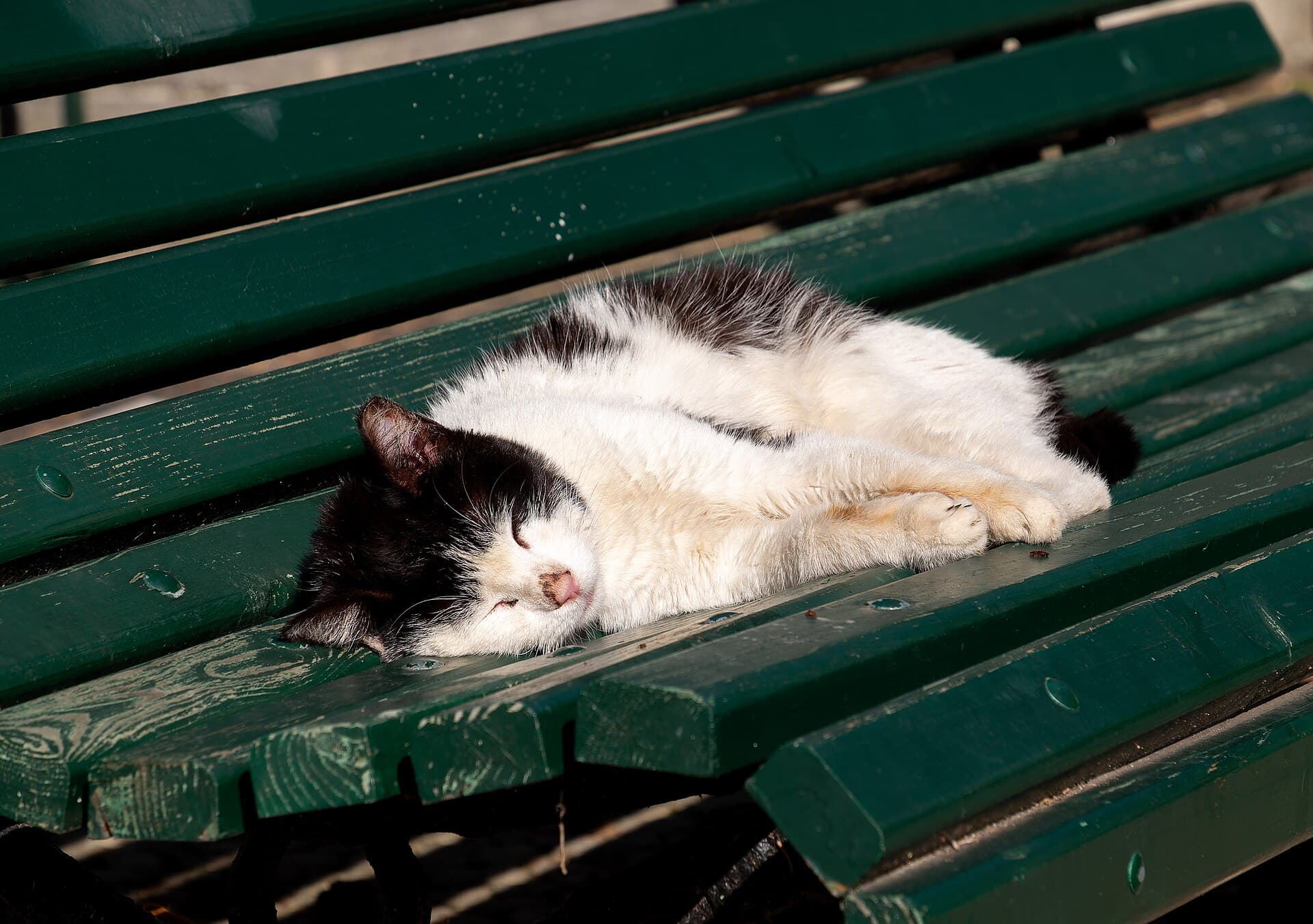
Few sounds are as soothing as a purring cat on your lap. Most of us read it as a simple message: I am happy. Purring often does mean contentment, but researchers have found it is a more flexible signal than that, and one that cats can adjust to get what they want.
How cats make the sound
Purring is produced in the larynx, or voice box. Muscles around the vocal folds twitch rapidly, opening and closing the gap between them. Air passing through as the cat breathes in and out makes the familiar rumbling sound. That is why a purr continues smoothly through both inhaling and exhaling.
A typical domestic cat purrs at a low frequency, roughly 25 to 150 vibrations per second. The rhythm is driven by a repeating signal from the brain, so the cat can start and stop it at will.
Purring starts in kittenhood
Kittens can purr when they are only a few days old, often while nursing. Their mother purrs too. Because newborn kittens are blind and deaf, the vibration may help keep mother and kittens in contact. Many researchers think purring began as a quiet "all is well" signal between mother and young.
Not always a happy sound
Cats also purr in situations that are clearly not pleasant: at the vet, while giving birth, when injured, and sometimes when they are very ill. In these cases, purring may work as a way to calm themselves or to signal that they are not a threat.
That is why a purr on its own does not tell you how a cat feels. Look at the whole picture: body posture, ears, eyes, appetite and behavior. A cat that purrs while hiding and refusing food needs attention, not reassurance.
The solicitation purr
In 2009, researchers at the University of Sussex led by Karen McComb published a study in Current Biology about what they called the "solicitation purr." Cat owners recorded their cats purring in two situations: while trying to get fed, and while relaxed and not asking for anything.
The food-seeking purrs contained an extra, higher-pitched component, something like a cry, embedded in the normal low rumble. When people listened to the recordings, they rated the food-seeking purrs as more urgent and less pleasant, even if they had never owned a cat.
The researchers suggested that cats may exploit the same sensitivity people have to the cries of human babies. The behavior seemed most common in cats living with one person, which may be where persistent, personalized pestering pays off best.
Can purring heal?
You may read that purring frequencies help heal bones and reduce pain. Some studies have found that vibration in a similar frequency range can support bone strength in other contexts, so the idea is interesting. However, there is no direct evidence that a cat's purr heals its own injuries. Treat this as an open question, not a fact.
Which cats purr?
House cats, cheetahs, servals, lynxes and many other small and medium-sized wild cats purr. Most big cats that roar, such as lions and tigers, do not purr continuously the way a house cat does, although they make other friendly sounds.
What to take from it
Enjoy the purr, but read it in context. A relaxed cat with soft eyes and loose body purring on your lap is almost certainly content. A cat that is purring loudly at 6 a.m. by the food bowl, with an edge of whine in the sound, is probably working on you. And a cat purring while hunched and withdrawn may be in pain and should see a vet.
Sources
- McComb K. et al. (2009). The cry embedded within the purr. Current Biology.
Written by Your Name
Every claim in this article is checked against the published studies listed above. Found an error? Tell us and we will correct it.
Field fact
Some cats hide a higher-pitched, cry-like sound inside their purr when they want food, and people find it hard to ignore.