Why do zebras have stripes? The horse fly answer
For 150 years, scientists argued about camouflage, cooling and social signals. Then researchers dressed horses in striped coats and watched what the flies did.
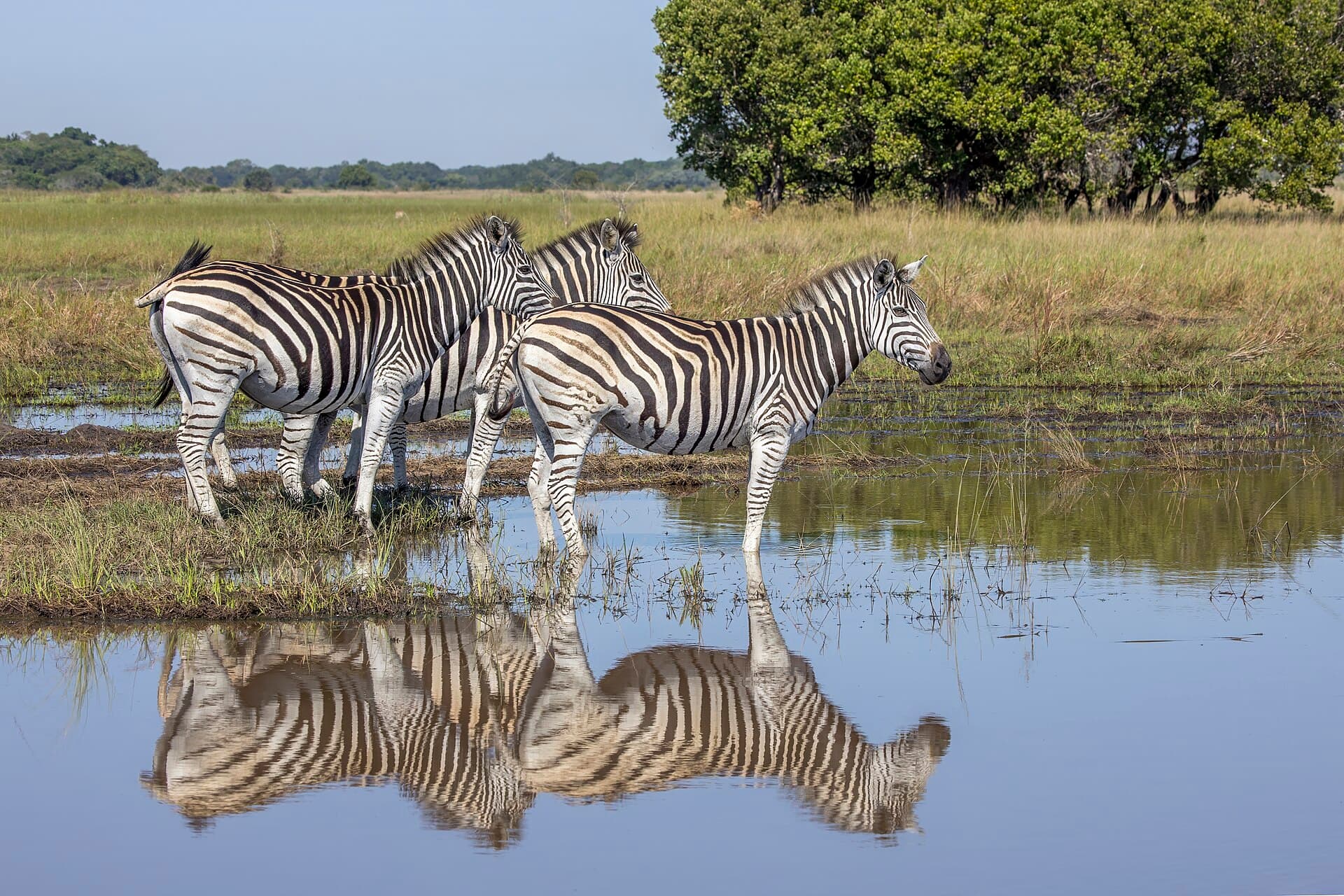
Few questions in biology have attracted as many answers as this one. Alfred Russel Wallace and Charles Darwin disagreed about it in the 1800s, and since then researchers have proposed at least a dozen explanations for the zebra's stripes. Over the last decade, though, one idea has pulled ahead, and the evidence for it comes from a surprisingly hands-on experiment.
The main contenders
For most of the twentieth century, these were the favorite explanations:
- Camouflage. Stripes might break up the zebra's outline in tall grass or at dusk.
- Confusing predators. A running herd of stripes could make it hard for a lion to single out one animal (sometimes called "motion dazzle").
- Temperature control. Black and white stripes heat differently, which might create small air currents that cool the skin.
- Social recognition. Every zebra's pattern is unique, so stripes might help herd members identify each other.
- Avoiding biting flies. Horse flies and tsetse flies spread diseases that can be deadly to horses and their relatives.
Each idea sounds plausible. The trouble is that most of them have not held up well when tested.
What the tests found
Studies of lion vision suggest that, at the distance where a lion decides to attack, it probably cannot resolve stripes well enough for them to confuse it, and at night they likely blur into a plain grey. Lions also kill zebras readily; zebras are among their preferred prey in many regions.
The cooling hypothesis has had mixed results. Some measurements found that striped surfaces stay slightly cooler, while others, using water barrels painted in stripes, found no meaningful difference.
The fly hypothesis, by contrast, kept producing consistent results. As early as the 1980s, experiments with painted boards showed that biting flies were less attracted to striped surfaces. A 2014 comparative study led by Tim Caro at the University of California, Davis, looked at where striped horses, zebras and asses live and found that stripe intensity lined up best with areas of high biting-fly activity, more closely than with predators or temperature.
The horse coat experiment
In 2019, Caro and colleagues published a study in the journal PLOS ONE that went a step further. At a horse farm in Britain, they filmed horse flies around zebras and domestic horses kept in the same fields. Then they put coats on the horses: some plain black, some plain white and some with zebra-like stripes.
The flies approached zebras and horses at similar rates, so stripes did not stop them noticing the animals from a distance. The difference showed up at close range. Flies approaching zebras failed to slow down properly and often bumped into them or flew past without landing. Horses wearing striped coats received far fewer landings than the same horses in plain coats, while the uncovered heads of those horses were bitten as often as before.
The researchers' interpretation is that stripes disrupt a fly's ability to control its landing. Insects use visual motion cues to judge speed and distance in the last moments before touching down, and high-contrast stripes seem to interfere with those cues.
Why flies matter so much to zebras
Being bitten is more than an annoyance. Biting flies in Africa carry diseases such as trypanosomiasis (sleeping sickness) and African horse sickness, both of which can kill equids. Zebras also have short, thin coats compared with many other grazing animals, which makes it easier for flies to bite through.
From an evolutionary point of view, a pattern that reduces bites by even a modest amount could make a real difference to survival over many generations.
Is the question settled?
Not entirely. Most researchers now see fly protection as the strongest explanation, but that does not mean stripes have only one use. Different benefits may matter more in different populations, and the patterns vary a lot. Plains zebras in southern Africa, for example, have fainter "shadow stripes" between the main black bands, while Grevy's zebras have narrow, tightly packed stripes.
What the story shows is how a long-running mystery can move forward when someone designs a simple, direct test. Dressing horses in striped coats is not glamorous science, but it answered a question that armchair reasoning had circled for more than a century.
Sources
- Caro T. et al. (2014). The function of zebra stripes. Nature Communications.
- Caro T. et al. (2019). Benefits of zebra stripes: behaviour of tabanid flies around zebras and horses. PLOS ONE.
Written by Your Name
Every claim in this article is checked against the published studies listed above. Found an error? Tell us and we will correct it.
Field fact
Horse flies landed far less often on horses wearing striped coats than on the same horses in plain coats.