How crows solve puzzles and remember faces
Crows make hooked tools, drop stones to raise water levels and hold grudges against specific people for years. Here is what the experiments show.
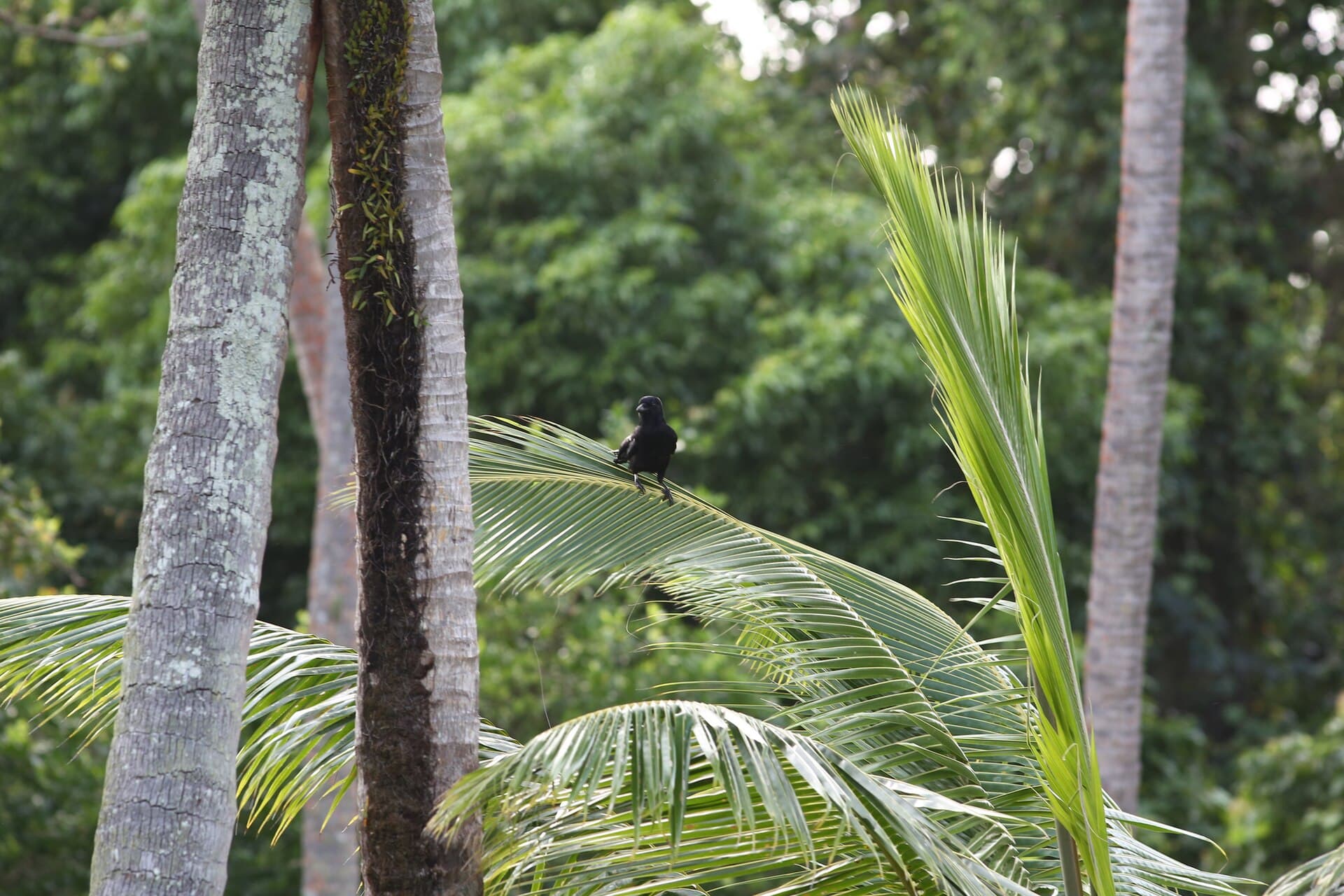
Crows, ravens, jays and magpies belong to a family of birds called corvids, and they have a reputation for cleverness. That reputation turns out to be well earned. Over the past few decades, careful experiments have shown that some corvids solve problems in ways once thought to be limited to great apes.
Betty and the bent wire
In 2002, researchers at the University of Oxford published a short paper in Science about a captive New Caledonian crow named Betty. She was given a small basket of food at the bottom of a vertical tube, along with a straight piece of wire. Betty bent the wire into a hook and used it to lift the basket out.
The finding was striking because the bird had no prior training with wire. Researchers have since debated how much of Betty's behavior was invention and how much drew on the natural tool-making these crows already do. Either way, it brought New Caledonian crows to wide attention.
Tool makers in the wild
In their native forests, New Caledonian crows make and use tools regularly. They strip twigs and shape them into hooks to fish insect larvae out of holes in dead wood. They also cut stepped tools from the stiff, barbed leaves of Pandanus plants.
Young crows take a long time to master these skills, and they spend an extended period with their parents. Studies suggest that both an inherited tendency to handle sticks and learning from family members contribute to how well they make tools.
The Aesop's fable test
In Aesop's fable The Crow and the Pitcher, a thirsty crow drops pebbles into a pitcher until the water rises high enough to drink. Scientists turned this into an experiment.
Birds were shown a tube of water with a floating treat that was out of reach. Rooks, Eurasian jays and New Caledonian crows learned to drop stones into the tube to raise the water level. In a 2014 study by Sarah Jelbert and colleagues, New Caledonian crows preferred to drop heavy objects rather than ones that floated, and chose tubes filled with water over tubes filled with sand.
The crows did not pass every version of the test, and that matters. Their performance suggests a working understanding of some cause and effect, not a full grasp of physics like a human's. Good research reports the limits along with the successes.
Crows remember faces
One of the best-known crow studies comes from John Marzluff and his team at the University of Washington. Researchers wearing a particular rubber mask trapped, banded and released a number of wild American crows on campus. People wearing a different, "neutral" mask simply walked around without bothering the birds.
Afterward, when someone walked through campus wearing the "dangerous" mask, crows scolded and mobbed them. The response grew over the following years and spread to crows that had never been trapped, suggesting that birds learned from each other which face to fear. The neutral mask drew little reaction.
The lesson for anyone who lives near crows is simple: they notice who treats them well and who doesn't, and they can remember for a long time.
Why corvids are so capable
Corvid brains are large relative to their body size. Bird brains are also organized differently from mammal brains. A 2016 study found that birds pack neurons much more densely into their forebrains than mammals do, so a crow's brain can hold a large number of neurons despite being small.
Their lifestyle may also reward intelligence. Many corvids live in complex social groups, store food for later, and eat a wide range of foods. Each of these demands memory, flexibility and problem solving.
Watching crows yourself
You don't need a laboratory to see crow intelligence. Watch how local crows handle hard foods: some drop nuts onto roads or rocks to crack them. Notice how they react to particular people, cats or birds of prey. Many birdwatchers find that once they start paying attention to crows, these common birds become some of the most interesting animals around.
Sources
- Weir A., Chappell J. & Kacelnik A. (2002). Shaping of hooks in New Caledonian crows. Science.
- Jelbert S. et al. (2014). Using the Aesop's fable paradigm to investigate causal understanding of water displacement by New Caledonian crows. PLOS ONE.
- Marzluff J. et al. (2010). Lasting recognition of threatening people by wild American crows. Animal Behaviour.
- Olkowicz S. et al. (2016). Birds have primate-like numbers of neurons in the forebrain. PNAS.
Written by Your Name
Every claim in this article is checked against the published studies listed above. Found an error? Tell us and we will correct it.
Field fact
Wild crows kept scolding a masked researcher for years after being trapped by someone wearing that mask.