Why cats knead, and what to do when it hurts
The rhythmic push of a cat's paws starts in the first days of life. What kneading means, why some cats do it more, and how to protect your lap.
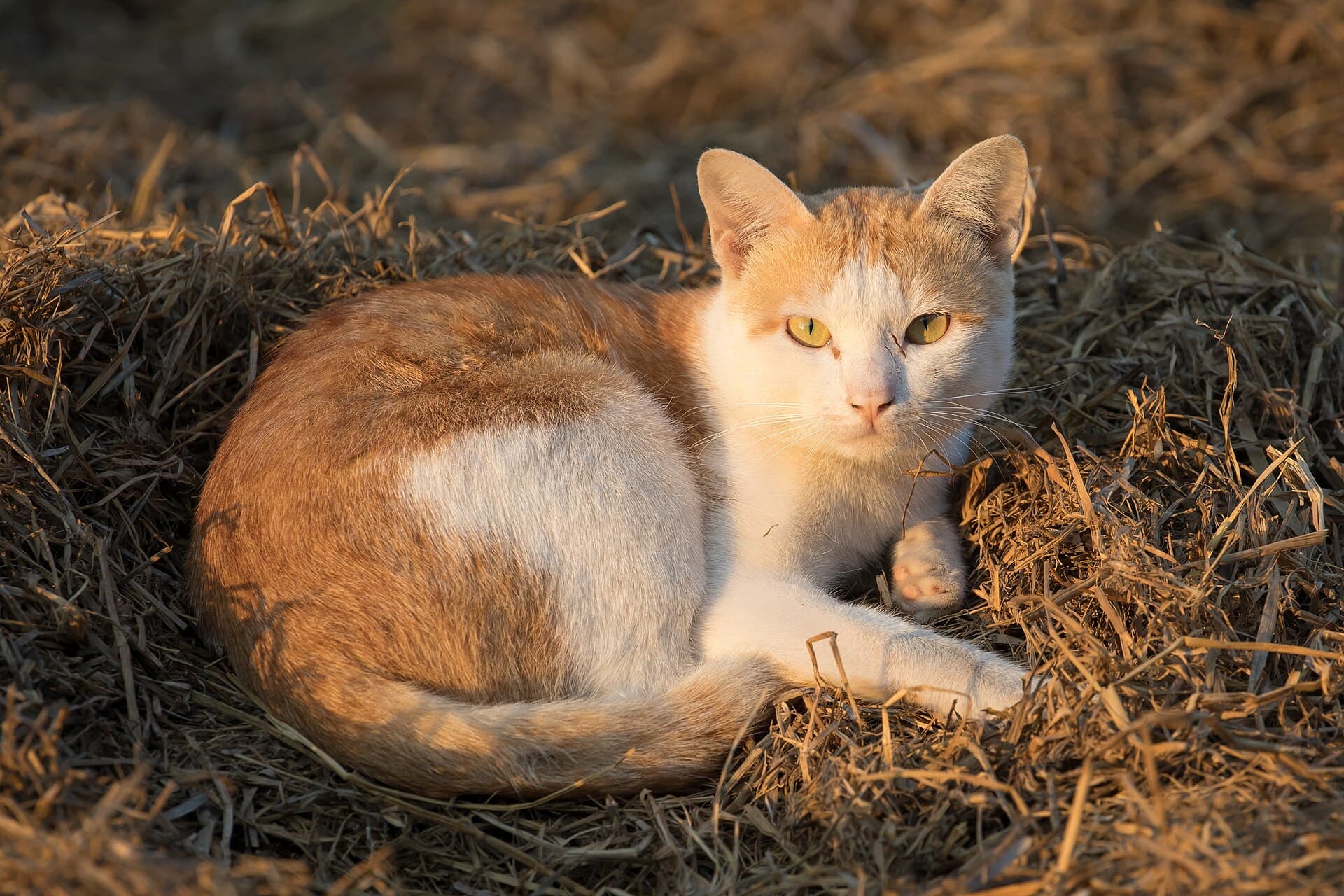
If you share your home with a cat, you have probably felt it: a slow, alternating push of the front paws into your lap, blanket or pillow, sometimes with claws, often with loud purring. People call it kneading, "making biscuits" or "making bread." It is one of the most familiar cat behaviors, and it starts early.
It begins with nursing
Newborn kittens knead their mother's belly while they nurse. The pressing motion helps stimulate the flow of milk. Kittens do this from their first days, long before their eyes open, which tells us the behavior is largely instinctive rather than learned.
Most animal behaviorists think adult kneading is a carry-over from this stage. The movement was linked with warmth, food and safety, so a cat that kneads as an adult is often relaxed and content. That is why kneading so often comes with purring, half-closed eyes and sometimes a little drool.
Other likely reasons
Kneading probably does more than one job. The commonly suggested reasons include:
- Comfort and self-soothing. Many cats knead when settling down, when being stroked or when they are in a familiar spot.
- Scent marking. Cats have scent glands between their paw pads. Pressing into a surface leaves their scent behind, marking the blanket, or your lap, as familiar territory.
- Preparing a resting place. Wild cats may press down grass or leaves to make a comfortable, safe spot to lie in. Kneading a bed before lying down may echo that.
- Stretching. The motion works the muscles of the front legs and shoulders.
None of these explanations excludes the others, and the reason may differ from one moment to the next.
Why some cats knead more than others
Some cats knead every day; others rarely or never do. That variation is normal and is not a sign that a non-kneading cat is unhappy. Personality, early experiences and simple habit all play a part. You may hear that cats weaned early knead more, and it is a reasonable idea, but there is little solid research on it, so treat it as a possibility rather than a fact.
Some cats suckle on fabric while kneading. Occasional suckling is usually harmless. If a cat chews and swallows fabric, though, that is different. Eating non-food items (called pica) can cause dangerous blockages in the gut and deserves a conversation with your vet.
When kneading hurts
Kneading is affectionate, but claws are sharp. Punishing a cat for kneading is a bad idea: it can make your cat anxious around you without teaching it anything useful. Instead, try these gentle options:
- Keep a folded blanket handy. Put a thick blanket or towel on your lap when your cat settles in. It protects your legs and gives the cat something soft to work on.
- Trim the claw tips. Regular nail trims take the sharpest points off. If you are unsure how to do it safely, ask a vet or vet nurse to show you. Avoid the pink "quick" inside the nail, which contains blood vessels and nerves.
- Redirect calmly. If the kneading becomes too much, gently lift your cat's paws or shift the cat onto a cushion beside you.
- Provide scratching posts. Scratching and kneading are different behaviors, but a good scratching post helps keep claws in good condition and gives your cat an approved place to use them.
Declawing is not a solution. It is a surgical amputation of the end of each toe, it is banned or heavily restricted in many countries, and veterinary organizations widely oppose it for non-medical reasons.
When to talk to a vet
Kneading on its own is almost never a health concern. Talk to a vet if kneading suddenly becomes constant or frantic, if it comes with other changes such as hiding, loss of appetite or over-grooming, or if your cat is eating fabric. Those can be signs of stress or an underlying medical problem.
For most cats, though, kneading simply means they feel safe. Being chosen as the kneading spot is, in cat terms, a compliment.
Sources
- American Veterinary Medical Association (policy). Declawing of domestic cats.
Written by Your Name
Every claim in this article is checked against the published studies listed above. Found an error? Tell us and we will correct it.
Field fact
Cats have scent glands between their paw pads, so kneading leaves their scent behind.