The waggle dance: how bees share directions
A honey bee can tell her sisters where to find flowers a kilometer away, using a dance on the honeycomb. How the code works and how it was proved.
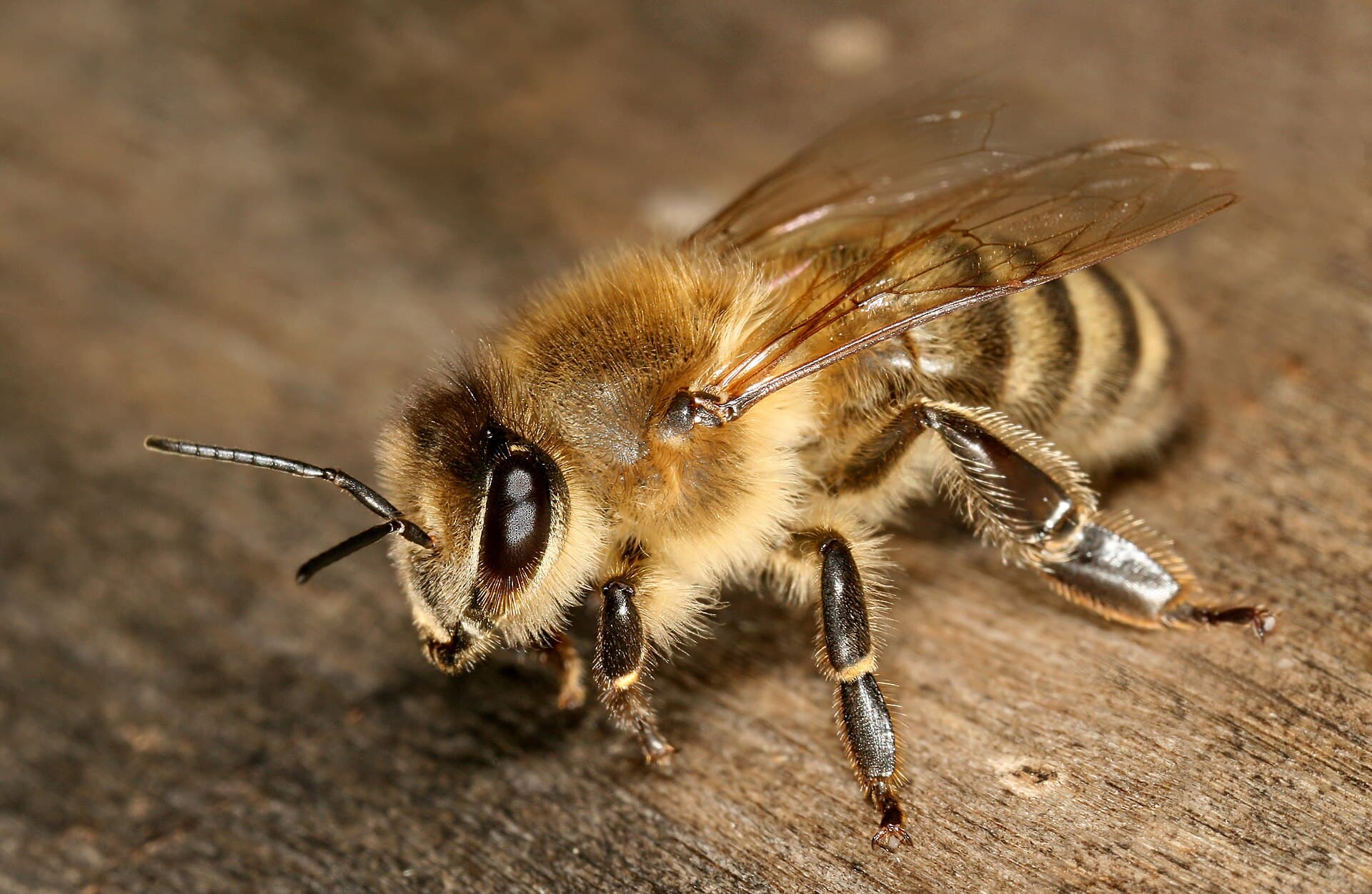
Inside a dark beehive, a worker bee returns from a good patch of flowers. She climbs onto the vertical honeycomb and starts to move in a figure-of-eight, shaking her body from side to side during the straight middle section. Other bees crowd around and follow her. Soon, some of them leave the hive and fly straight to the same flowers.
This is the waggle dance, one of the most detailed communication systems known in any animal other than humans.
Decoding the dance
The Austrian biologist Karl von Frisch spent decades studying how honey bees communicate. In the 1940s, he worked out that the dance contains two key pieces of information.
Direction. The straight "waggle run" points at an angle. On the vertical comb, straight up represents the direction of the sun. If the waggle run points 40 degrees to the right of vertical, the food is 40 degrees to the right of the sun's position, as seen from the hive entrance.
Distance. The longer the waggle run lasts, the farther away the food. Roughly speaking, each second of waggling represents several hundred meters to about a kilometer of flight, but the exact scale varies between colonies and landscapes. Bees seem to measure distance by how much visual movement they see during the flight, not by the energy they use.
For food very close to the hive, bees perform a short, looping dance that was once called the "round dance." Researchers now see it as a short version of the waggle dance.
Von Frisch shared the Nobel Prize in Physiology or Medicine in 1973 with Konrad Lorenz and Nikolaas Tinbergen for their work on animal behavior.
Adjusting for the moving sun
The sun moves across the sky during the day. If a bee keeps dancing for hours, the angle has to change. Experiments show that dancers do adjust their direction to account for the sun's movement, even after time spent inside the dark hive.
Proving that bees follow the instructions
For many years, some scientists argued that recruits might find food by smell alone, using the scent of flowers on the dancer's body. In 2005, a team led by Joe Riley published a study in Nature that helped settle the question.
They attached tiny radar transponders to bees that had followed a dance and tracked their flights. The recruits flew in the direction and roughly the distance indicated by the dance. When the researchers moved the bees to a different starting point before release, the bees flew in the direction they had been told, ending up in the wrong place. That showed they were using the dance information, not just following smells.
Once near the target, though, scent does matter. Bees use flower odors on the dancer, and at the site, to find the exact patch.
Why the dance matters
A honey bee colony needs a huge amount of nectar and pollen. The waggle dance lets the colony focus its foragers on the richest flower patches as conditions change through the season. Dancers also dance longer and more vigorously for better food sources, which recruits more bees to the best places.
Honey bees use dances when the colony swarms, too. Scout bees dance to advertise possible new nest sites, and the swarm eventually reaches agreement on one location.
Helping bees near you
Honey bees are managed by beekeepers, but they share flowers with thousands of wild bee species that often face greater pressure. To support them all:
- Plant a variety of flowers that bloom from early spring to late autumn.
- Avoid using pesticides on flowering plants.
- Leave some areas a little wild, with bare soil and dead stems where wild bees can nest.
The next time you see a bee on a flower, consider that she might soon go home and describe the spot to her sisters with a dance.
Sources
- Riley J. R. et al. (2005). The flight paths of honeybees recruited by the waggle dance. Nature.
- The Nobel Prize (1973). The Nobel Prize in Physiology or Medicine 1973.
Written by Your Name
Every claim in this article is checked against the published studies listed above. Found an error? Tell us and we will correct it.
Field fact
The angle of a bee's waggle run, measured from straight up, matches the angle between the food and the sun.